KAron™ Self-Lubricating Liner Systems
Reduce Wear and Improve Performance in Any Application or Environment
REDUCE WEAR AND IMPROVE PERFORMANCE IN ANY APPLICATION OR ENVIRONMENT
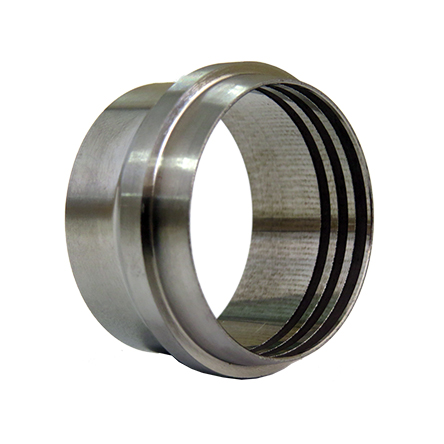
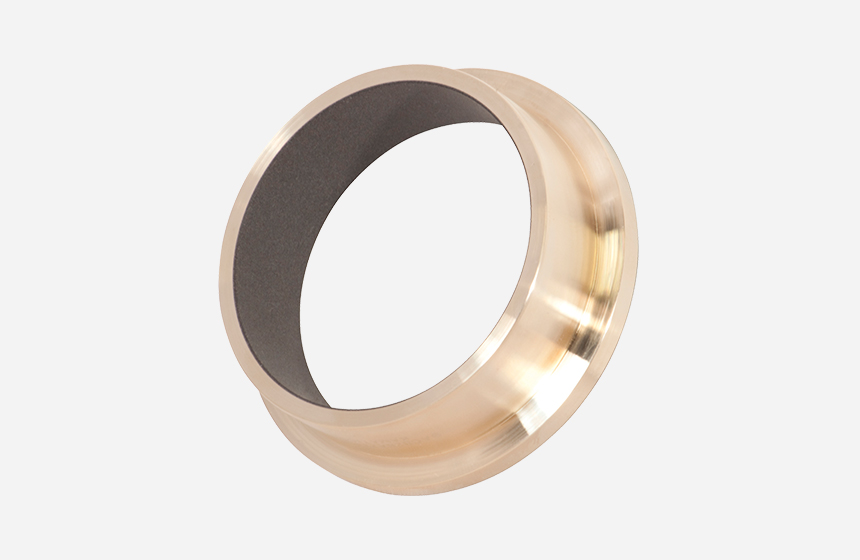
KAron™ is a family of self-lubricating bearing liners engineered to perform in environments where conventional grease lubrication isn’t practical, reliable, or even possible. Each KAron variant is a composite material, combining PTFE and reinforcing fibers in a polymer matrix, molded directly onto the bearing substrate and machinable to final tolerance. The result is a bearing that runs without supplemental lubrication for the life of the component.
Kamatics invented the moldable, machinable, self-lubricating bearing liner in 1973, building on earlier work developing the KAcarb liner for the SH-2 Sea Sprite rotor flap program. In the decades since, the KAron platform has expanded into a family of formulations, each tuned for a specific combination of load, temperature, friction, and environmental conditions. This page covers the six variants Kamatics currently fields across aerospace, defense, marine, hydropower, and industrial applications. It explains how they differ, which conditions each one is built for, and how to choose between them.
Maintenance-free performance in demanding environments
Self-lubricating liners exist to solve a specific engineering problem: applications where you can’t reliably re-lubricate a bearing, but you still need consistent low friction and long service life. That includes sealed-for-life assemblies, components exposed to seawater or extreme humidity, parts operating at temperatures that break down grease, vacuum and space environments, and high-cycle-count mechanisms where maintenance intervals would compromise availability.
Across the KAron platform, three performance attributes hold consistently:
- Extended service life without re-lubrication intervals or scheduled maintenance
- Low and stable coefficient of friction across the variant’s full operating range
- Environmental resilience: operation in conditions that disqualify greased bearings, from saltwater immersion to gas turbine engine temperatures
Different operating regimes require different chemistries, which is why KAron has evolved into a platform rather than a single product. The variants below are grouped by the engineering job they’re designed to do.
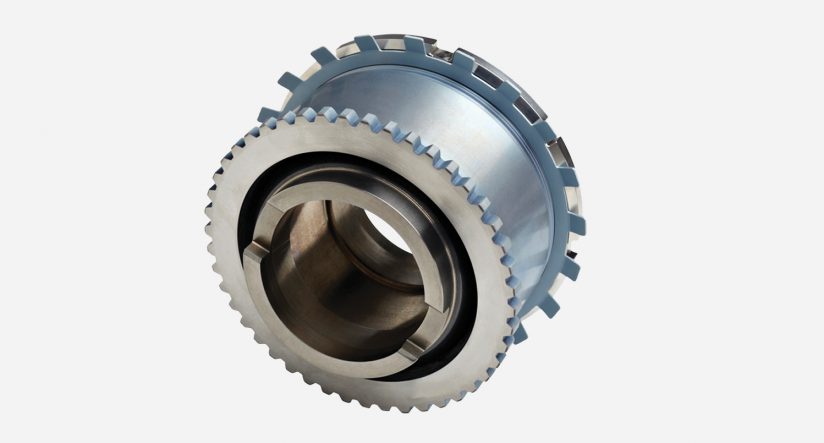
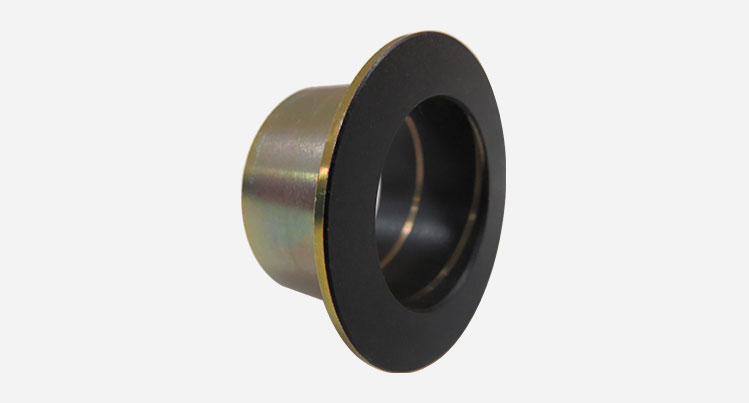
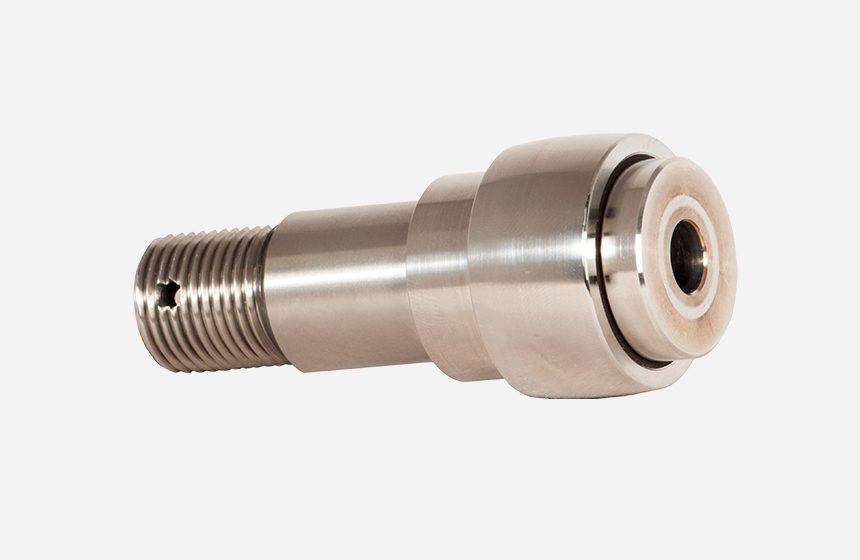
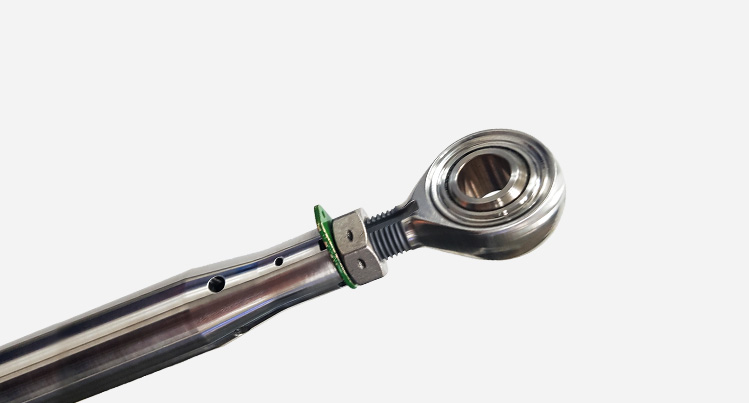
High-Load Workhorses: KAron™ B and KAron™ BX
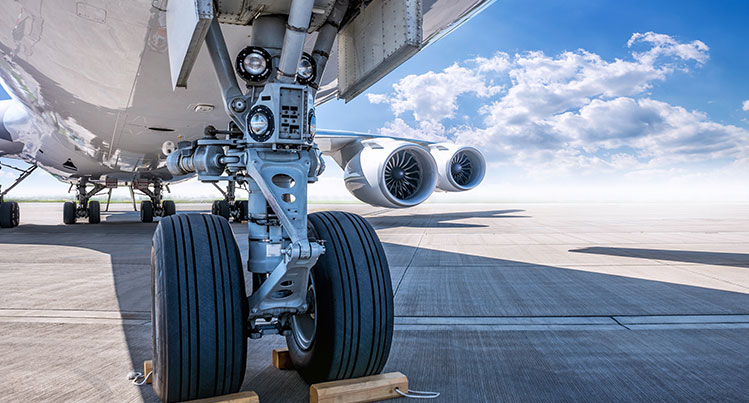
KAron B is the established high-load liner in the KAron family. It carries continuous dynamic loads up to 50,000 psi and operates from -100°F to 400°F, with a coefficient of friction around 0.10 and qualifications to SAE AS81820, AS81934, and Boeing material specification BMS3-39. KAron B is the workhorse behind aircraft flaps and slats, landing gear, highly loaded linkages, jet engine control systems, and flight control actuation.
KAron BX is the next-generation evolution of the B family, with improved processing, lower friction, and dramatically extended cycle life. In testing, KAron BX has completed 100,000 cycles at 35,000 psi, which is four times the cycle requirement under AS81820, and over 1,000,000 cycles in dry operation. Friction is approximately 40% lower than standard KAron B. Where the application calls for maximum service life under sustained heavy load, KAron BX is the variant to specify.
Low-Friction and Water-Service Variants: KAron™ V and KAron™ VS
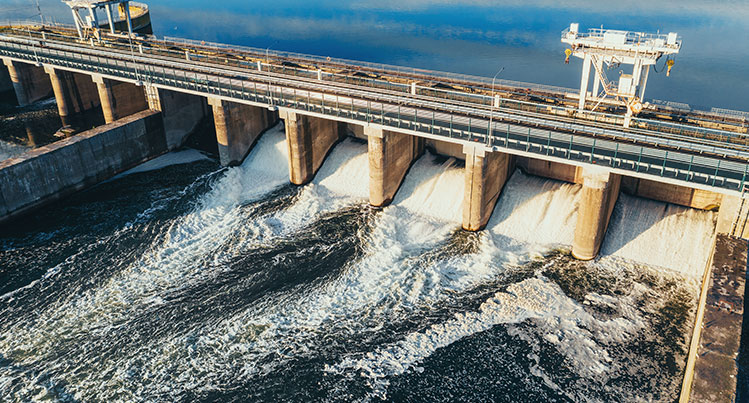
KAron V is the only KAron variant qualified for water service. That includes both freshwater and saltwater applications: marine vehicles, hydropower turbines and wicket gates, navigation lock gates, rudder and pintle bearings, and hydrofoil strut pivots. It carries dynamic loads up to 40,000 psi, operates from -100°F to 300°F, and is qualified to AS8943. Coefficient of friction is roughly 25% lower than KAron B in its operating range, and surface speeds run up to 10 fpm. Beyond marine and hydropower, KAron V also sees service in motor sports and demanding industrial applications where high load and self-lubrication are both required.
KAron VS delivers the lowest friction across the entire KAron platform, with a coefficient of friction of 0.02 to 0.05 at room temperature and particularly strong performance at low temperatures. It’s qualified to the European aerospace standards EN4538, EN4539, and EN4540. Typical applications include flight controls (ailerons, rudders, elevators, spoilers, flaps and slats), track rollers, spherical bearings, landing gear joints, steering systems, and helicopter swashplate and gimbal bearings. KAron VS is the right choice where minimizing breakaway and running friction is the dominant requirement.
High-Temperature Performance: KAtherm® T-87 and KAtherm® FH
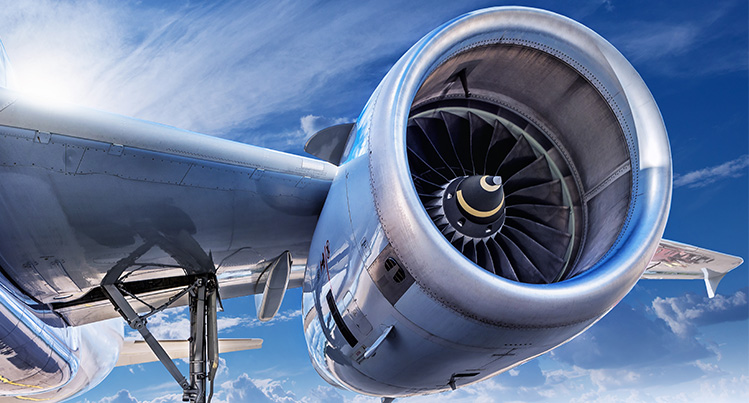
KAtherm T-87 is built for continuous operation up to 500°F, with surface velocities up to 30 fpm and a friction range of 0.04 to 0.10. It’s the standard liner specification for gas turbine engine variable stator vane bushings, sync ring pads, engine control bearings, cam followers, thrust reverser components, and high-speed oscillating helicopter applications including main and tail rotor pitch change, pitch link, and scissors link bearings. A T87S sub-variant is also available, optimized for higher surface speeds and lower friction in helicopter rotor and high-temperature industrial applications.
KAtherm FH extends operating temperature further than any other liner in the family, with continuous service to 700°F and short-term excursions to 800°F. Static ultimate load is 135,000 psi, with a maximum dynamic bearing load of 20,000 psi at 700°F. KAtherm FH combines a high-temperature thermoset resin with a woven fabric of high-strength synthetic fibers and self-lubricating PTFE fibers, producing an optimized balance of compressive strength, low wear, low friction, and thermal stability. It’s the variant for the most thermally demanding bearing applications in the platform.
Space and Vacuum Environments
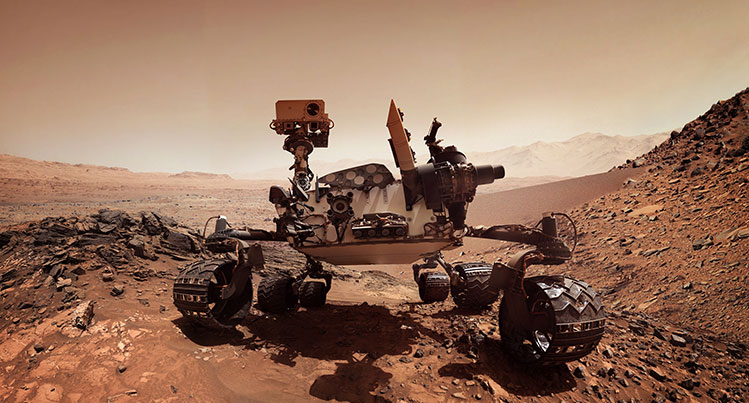
For applications in vacuum and space environments, material outgassing is a critical selection factor. Excessive outgassing can contaminate sensitive optical surfaces, sensors, and mechanisms, so liners used in satellites, spacecraft, and other vacuum applications must be characterized for their outgassing behavior.
Four KAron variants have undergone outgassing testing for use in these environments: KAron B, KAron V, KAron VS, and KAtherm T-87. This makes them candidates for spacecraft mechanisms, deployable structures, satellite actuation, and other applications where vacuum performance and low contamination are required. Because outgassing requirements vary considerably by program and by the sensitivity of nearby hardware, contact Kamatics engineering for specific test data and to confirm suitability for your application.
KAron™ variant comparison
Download the KAron Design GuideThe table below summarizes operating temperature and primary application fit for each variant. Detailed specifications, including load capacity, coefficient of friction across pressure and velocity ranges, substrate compatibility, and fluid compatibility, are available in the individual datasheets linked in the resources section.
| Variant | Operating Temp | Best For | Qualification | Datasheet |
|---|---|---|---|---|
| KAron™ B | -100°F to 400°F | High-load aerospace: flaps/slats, landing gear, jet engine controls | AS81820, AS81934, BMS3-39 | Datasheet |
| KAron™ BX | -100°F to 400°F | Extended cycle life at high load; 4× AS81820 cycle requirement | AS81820, AS81934 | Datasheet |
| KAron™ V | -100°F to 300°F | Marine, hydropower, navigation gates. The only KAron qualified for water service. | AS8943 | Datasheet |
| KAron™ VS | -100°F to 300°F | Lowest friction in the family; flight controls, swashplates, landing gear | EN4538, EN4539, EN4540 | Datasheet |
| KAtherm® T-87 | -65°F to 500°F | Gas turbine engine controls, thrust reversers, helicopter rotors | N/A | Datasheet |
| KAtherm® FH | -65°F to 700°F | Highest-temperature applications; 800°F short-term excursion | N/A | Datasheet |
Choosing a liner for your application
The most useful way to select a KAron variant is by the dominant operating condition. The guidance below is a starting point; Kamatics engineering supports application-specific selection and qualification.
Water and Marine Environments
KAron V is the only variant qualified for water service, in both freshwater and saltwater. Specify KAron V for rudder and pintle bearings, hydrofoil struts, hydropower wicket gates, navigation lock gates, and any marine application where moisture exposure is sustained or repeated.
High-Temperature Applications
KAtherm T-87 for continuous service up to 500°F, including gas turbine engine controls, thrust reversers, and helicopter rotor systems. KAtherm FH for the most thermally demanding applications up to 700°F, with short-term capability to 800°F. Below 400°F, the high-load variants (KAron B and BX) generally outperform on load capacity and cycle life.
Low-Friction Requirements
KAron VS for the lowest friction across the KAron family, with particularly strong performance at low temperatures. Typical applications are flight controls, swashplates, gimbals, and any mechanism where minimizing breakaway torque is the dominant requirement.
High-Load and Extended Cycle Life
KAron B for established high-load aerospace applications with AS81820, AS81934, and BMS3-39 qualification. It’s the proven workhorse for flaps, slats, landing gear, and flight control actuation. KAron BX where extended cycle life under heavy load is the primary driver, delivering four times the AS81820 cycle requirement.
Space and Vacuum
KAron B, V, VS, and KAtherm T-87 have all been characterized through outgassing testing for vacuum-environment use. Variant selection then follows the same load, temperature, and friction criteria as terrestrial applications. Contact engineering for outgassing data specific to your program.
Engineered for your application
The six variants above cover the majority of self-lubricating bearing applications, but Kamatics continues to develop new liner chemistries for unique operating requirements. Custom formulations are developed in collaboration with the customer’s engineering team, drawing on more than five decades of liner development experience and Kamatics’ AS9100D-certified manufacturing capabilities. If your application falls outside the operating envelope of the standard variants, or if you’re not sure which variant fits, Kamatics engineering can help you scope the right solution.

Frequently asked questions
What is a self-lubricating bearing liner?
A self-lubricating bearing liner is a composite material, typically combining PTFE with reinforcing fibers in a polymer matrix, bonded to the bearing’s load-carrying surfaces. The PTFE transfers a microscopically thin film to the mating surface during operation, providing lubrication without grease, oil, or scheduled re-lubrication.
How is KAron different from PTFE-lined or greased bearings?
KAron is molded directly onto the bearing substrate and then machined to final tolerance, which makes it dimensionally precise and mechanically integrated with the bearing in a way that thin coatings or bonded films aren’t. Compared to greased bearings, KAron eliminates the maintenance and environmental-exposure issues associated with grease lubrication, and operates reliably in conditions (water, vacuum, extreme temperatures, contamination) where grease degrades.
What temperature range does KAron operate in?
Across the platform, KAron variants operate from cryogenic temperatures (-100°F) through 700°F continuous (KAtherm FH), with short-term excursions to 800°F. The specific operating range depends on the variant. See the comparison table above or the individual datasheets for variant-specific limits.
Is KAron qualified to industry standards?
Yes, at multiple levels. Kamatics is certified to AS9100D at the company level. Individual KAron variants carry liner-level qualifications to applicable SAE, MIL, Boeing, and European aerospace standards (including AS81820, AS81934, AS8943, BMS3-39, and EN4538/4539/4540) depending on the variant. Specific qualifications are listed in each variant’s datasheet.
Can KAron be used in saltwater applications?
Yes. KAron V is the variant qualified for water service (fresh or salt) and is the standard choice for marine bearings, hydropower turbines, and navigation infrastructure where sustained moisture exposure would compromise a greased bearing or many other liner systems.
Does KAron require maintenance or re-lubrication?
No. KAron is designed for maintenance-free operation across the service life of the bearing. Eliminating scheduled re-lubrication is one of the principal reasons engineers specify self-lubricating liners in the first place.
KAron™ datasheets and design resources
Detailed engineering data for each KAron variant is available in the linked datasheets below. For variant selection support, custom formulation inquiries, or application engineering, contact the Kamatics team.